check_circle
Pat completely dry · apply a pea-size amount · let it settle
check_circle
Patch test first · external cosmetic care · experiences vary
Technical support provider:
Couldn't load pickup availability
CLINCLII Skin-Fold Comfort Barrier Cream — 57 mL
Regular price
$58.98
Regular price
$58.98
Sale price
$149.98
Unit price/ per
SAVE 60%
Sold out
A focused moisture-and-friction barrier routine for external skin folds. The reference formula features zinc oxide 15%, undecylenic acid 10%, witch hazel and tea tree oil in a thin-layer cream designed to help bra-line, waistline, upper-leg and underarm clothing-line areas feel drier and more comfortable.
Patch test first. Apply a pea-size amount to clean, completely dry, intact skin and allow the layer to settle before dressing. External cosmetic care only. Do not use on broken, bleeding, infected or severely inflamed skin. Seek professional care for severe, spreading or persistent symptoms. Individual experiences and timing vary.
Warm skin folds can hold on to moisture while daily movement adds friction. CLINCLII is a focused, thin-layer barrier routine designed to help those areas feel drier, calmer and more comfortable.
57 mL1.92 fl oz per tube
15%zinc oxide barrier
1× dailysimple starting routine
External cosmetic care for clean, dry, intact skin. Individual experience varies.
REFERENCE ROUTINE · IN MOTION
See what the thin-layer routine means.
Three short loops preserve the reference page's clearest demonstrations: a real-world placement routine, moisture held inside a fold and the visual role of a deliberately thin barrier.
REAL ROUTINE · REFERENCE FOOTAGE
01 · PLACE WITH INTENTION
Lift fabric away. Work only on clean, dry, intact external skin.
The movement is the point: make the fold easy to reach, keep the amount focused and let the layer settle before dressing.
MOISTURE IN A FOLD
02 · WHY DRYING MATTERS
Moisture can stay where two surfaces meet.
Pat fully dry before applying the barrier step.
THIN BARRIER LAYER
03 · LESS, SPREAD EVENLY
A smooth film—not a heavy coat.
Use only enough to create a light, even finish.
Reference-page motion is shown for routine education. Animation is illustrative; the real-use clip is not proof of a guaranteed outcome. Individual experiences vary.
THE EVERYDAY CYCLE
Moisture. Friction. Repeat.
Tap each factor to see why the routine starts with dryness and ends with a deliberately thin barrier.
WARM FOLDS HOLD HUMIDITYDrying first makes the next step work harder.
Pat the area completely dry after bathing or sweating. Applying a barrier over trapped moisture can leave the area feeling heavier.
PLACEMENT, MADE CLEAR
Choose the zone. Keep the layer thin.
Use the guide below to plan a simple, discreet routine. The selected panel explains the practical starting point for each area.
Begin beneath the bra line.
After bathing, lift fabric away, pat the fold dry and smooth on a pea-size amount. Allow it to settle before dressing.
DO NOT USEon broken, infected or actively bleeding skin; stop if irritation worsens.
FOUR-INGREDIENT FOCUS
A formula with defined roles.
01
Zinc Oxide 15%
Creates a physical barrier that helps shield skin from moisture and rub.
02
Undecylenic Acid 10%
Included in the reference formula to support a fresher, drier-feeling environment.
03
Witch Hazel
A familiar botanical selected for a conditioned, clean-feeling finish.
04
Tea Tree Oil
Supports the formula's fresh-feeling sensory profile.
Ingredient information follows the finished reference label. Check the package you receive for the complete ingredient list and directions.
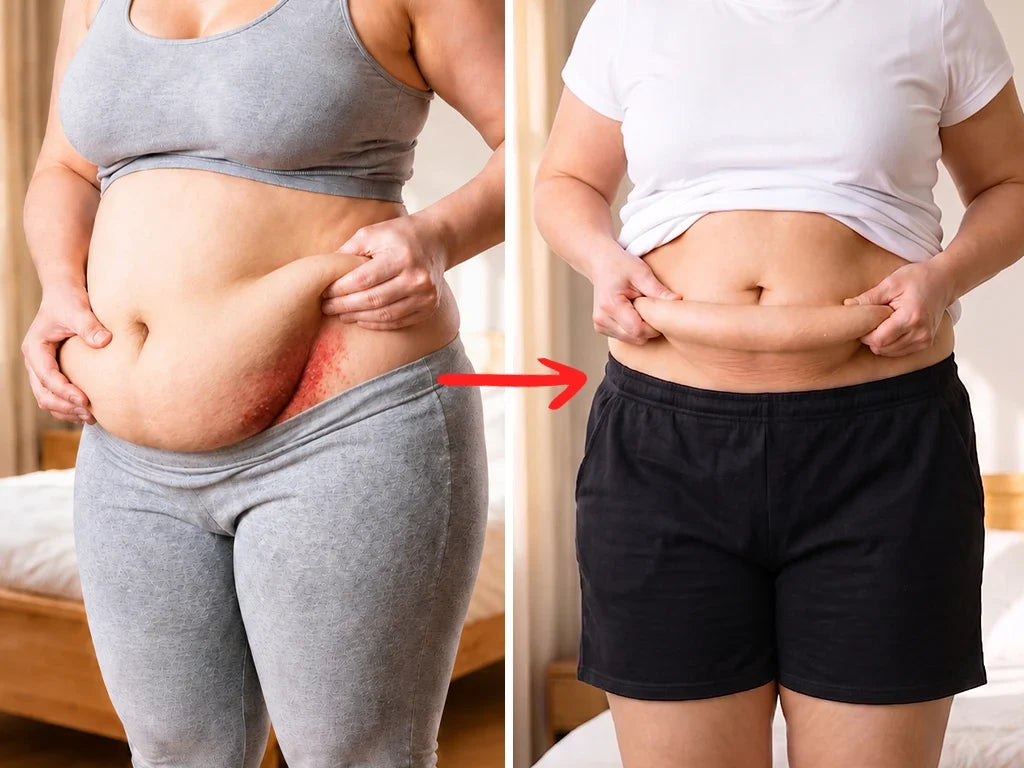
REFERENCE-PAGE COMPARISON
Use the same light. Track your own skin.
One visual story, kept in context
This image comes from the supplied reference page. It is shown as an individual experience—not a clinical guarantee or a promised timeline.
The area may feel more protected and comfortable once the thin layer sets.
FIRST WEEK
Consistent drying and reduced rub may help the area look less visibly stressed.
ONGOING CARE
Continue only if skin feels comfortable. Visible response and timing remain individual.
Lighting, clothing, body position and timing can affect a visual comparison. Seek professional care for severe pain, spreading redness, odor, fever, discharge or persistent symptoms.
THE THIN-LAYER METHOD
Clean. Dry. Apply less.
01
PATCH TEST
Test a small amount first and follow the finished label.
02
PAT COMPLETELY DRY
Use a clean towel after bathing, activity or sweating.
03
SMOOTH A THIN LAYER
Use a pea-size amount for a focused zone; more is not better.
04
LET IT SET
Wait a few moments before replacing close-fitting clothing.
WHAT USERS NOTICE
Comfort is the first benchmark.
Paraphrased themes from the supplied reference experience; not independent medical evidence.
★★★★★
“A less sticky start to my day.”
The thin-layer finish felt easier beneath everyday clothing.
REPORTED EXPERIENCE · RESULTS VARY★★★★★
“Finally something simple.”
Drying the fold first and using a small amount made the routine easier to repeat.
REPORTED EXPERIENCE · RESULTS VARY★★★★★
“More comfortable during movement.”
The barrier step helped reduce the heavy, damp feeling in friction-prone areas.
REPORTED EXPERIENCE · RESULTS VARY
QUESTIONS, ANSWERED
Before your first layer.
The first answer is open. Every remaining question has a visible + control.
WHEN TO ASK A CLINICIANSevere pain, broken skin, spreading redness, discharge, odor, fever, frequent recurrence or symptoms that do not improve.
How often should I use it?+
Start once daily on clean, dry, intact skin, or follow the finished package directions. Reapply only as directed.
Where can I apply it?+
Common friction-prone folds include the bra line, waistline, upper-leg friction zones and underarm clothing line. Avoid eyes, lips, mucous membranes and intimate internal areas.
Can I use it on an active rash?+
Do not use it on broken, bleeding, infected or severely inflamed skin. Persistent or worsening symptoms need professional assessment.
Will it permanently cure intertrigo?+
No permanent cure or fixed result is promised. This page presents a moisture-and-friction barrier routine for cosmetic comfort; recurring symptoms may have causes that require medical care.
Will it stain clothing?+
Use a deliberately thin layer and allow it to settle before dressing. Test with light fabric first because individual use amounts and textiles vary.
How long does a 57 mL tube last?+
That depends on the number and size of areas treated. Using a pea-size amount on one focused zone generally extends a tube further than broad application.
CHOOSE YOUR COMFORT SET
A routine sized for real life.
3 TUBES · MOST POPULAR171 mL total
$58.98
1 TUBE57 mL / 1.92 fl oz
$29.95
5 TUBES · BEST VALUE285 mL total
$89.97
Choosing a selection results in a full page refresh.